
Digital Corporate Learning

The Corporate Learning function is intensively challenged by digitalisation. While e-learning at its inception in the 1990s was mainly motivated by its cost saving aspects, companies quickly realised that the learning impact by computer based trainings (CBT) or web based trainings (WBT) alone was by far lower than expected and lower than comparable instructor led tradings (ILT). A German KPMG study from those early days (Haben et al. 2001) comes to the conclusion that only half of Germany’s large corporates were using e-learning and that its content was focussed on factual topics (e.g. IT, finance, languages, product knowhow). Fast forward to the situation today, e-learning is integrated in most companies, the EdTech market is in a consolidation process and moves from a content catalog offered by Learning Management Systems (LMS) towards Learning Experience Systems (LXP) often supported by Artificial Intelligence (Bersin 2019).
Yet as technology changes (Baumgarten / Müller 2020), jobs change. Our research is focussing on the EdTech market as well as the new roles that evolve in the corporate arena (Jüster / Mueller 2022). Topics are ranging from content curation approaches or technological implementations of learning paths to motivational ingredients for digital learning and new roles in learning management.
We are part of the European EdTech network to share and apply findings with colleagues.
Baumgarten, Ch.; Müller, A. (2020). Einen Mercedes in der Garage, aber der Führerschein fehlt? Über die Herausforderungen von Zusammenarbeit. In: Wörwag, S. / Cloots, A. (Hrsg.): Human Digital Work – Eine Utopie? Wiesbaden: Springer, 239-252
Bersin, J. (2019) Learning Experience Market (LXP) Grows Up: Now Too Big To Ignore. Josh Bersin: Insights to Corporate Talent, Learning, and HR Technology (Link)
Haben, M. , Hofmann, H.J. and L. Michel (2001) eLearning zwischen Euphorie und Ernüchterung. München: KPMG
Jüster, M.; Müller, A. (2022). Die Entbettung beruflicher Aus- und Weiterbildung: Zur digitalen Transformation des Corporate Learning. In: Cloots, A. (Hrsg.): Hybride Arbeitsgestaltung. Wiesbaden: SpringerGabler
Virtuelle Hochschule Bayern (2024). Corporate Digital Learning. Digitalisierung betrieblicher Bildung. Virtual Course (in German)
Regional Circular Business Development

The physical limitations of an island form an invitation to focus on its original business opportunities. In a partnership with the Humboldt Cosmos Multiversity, the Canaries and in particular the island of Tenerife has been the subject of novel business ideas, which were generated by annual field studies. This longitudinal research accompanies the development of one of the outermost European regions beyond its current dependency on tourism.
Since 2022 this work continues as the Erasmus+ Circular Innovation Bootcamp – see circularinnovationbootcamp.eu for the current partner network, programme and past editions.
2017: Periphery as a Hub – The Canaries & Africa (student documentation)
2018: An Institute for the Industrialization of Africa (student term paper)
2019: Circular Economy – A Model for the Canaries? (student term paper)
2020: Sustainable Businesses – ideas for the recovery of Tenerife? (student term paper)
2021: Circular Business Models – a solution to expand the local economy on Tenerife? (student term paper)
2022: Circular Innovation Bootcamp
(student report)
2023: Circular Innovation – a project with Loro Parque, EAVE and wooptix
(student report)
2024: Advancing Circular Practices: Case Studies for a Sustainable Tenerife
(student report)
2025: Circular Economy in Tenerife: Case Studies & Joint Recommendations for a Sustainable Future
(student term paper)
The work of Paul de Faget de Casteljau
(1930-2022)
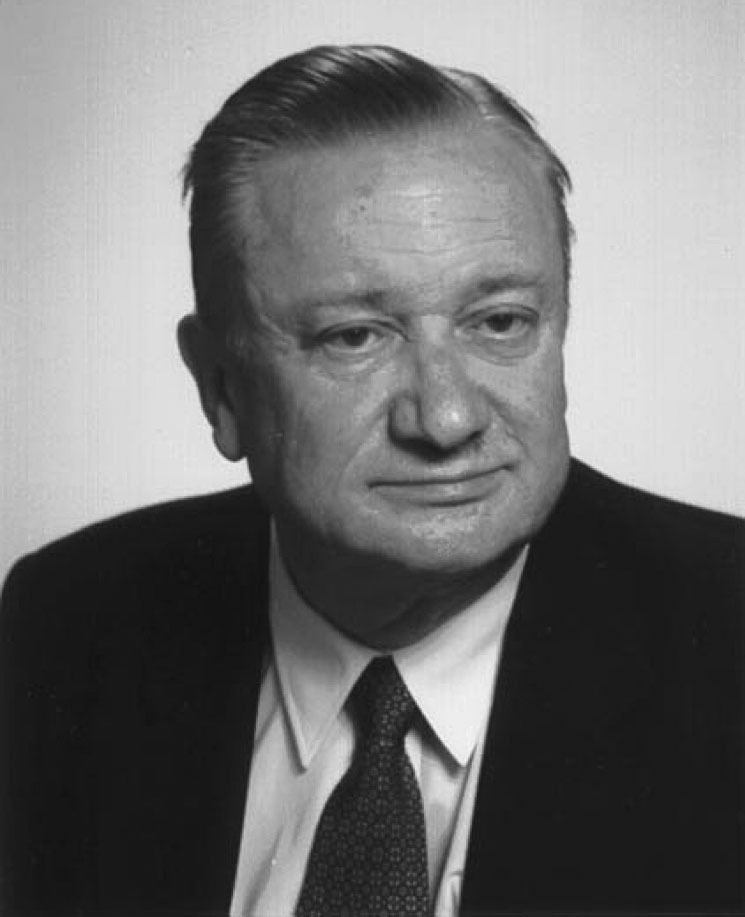
Whilst Paul de Casteljau is now famous for his fundamental algorithm for the generation of curves and surfaces, little is known about his other findings on blossoming, geometric optics, the 14-point strophoid, golden matrices, quaternions and relativistic physics, and machining tolerances at Citroën. This strand of research has grown substantial enough to move to its own page: Paul de Casteljau →